Educate Together places huge value on sustainability and ESD, and this is in evidence in schools across the network. There have been some recent events focusing on sustainability and ESD with the launch of Our Dúlra Agreement in Firhouse ETSS on 12th November and the national ESD Forum that was held in Croke Park on 17th November. We are very proud that Educate Together played a key role in both events.
Children and young people care deeply about environmental sustainability, and our student advisory group and student events raise this regularly as a key issue for them.
Following our extensive consultation with members, sustainability was included as one of the five domains in our Ethos Quality framework, so we know our members care too.
In our Educate Together network, there are many individual teachers and school leaders engaging in important work to support and champion sustainability and ESD.
Our Dúlra Agreement
In September 2025, the Irish Schools Sustainability Network convened a group of expert organisations, the Biodiversity Working Group for Schools, to work in partnership and help schools accelerate the transformation of school grounds into biodiverse rich spaces. Subsequently the concept of Our Dúlra Agreement, a national commitment to nature-rich education based on six articles, was drafted by the organising committee and shared with education system leaders at Wildacres, Co. Wicklow in June 2026.
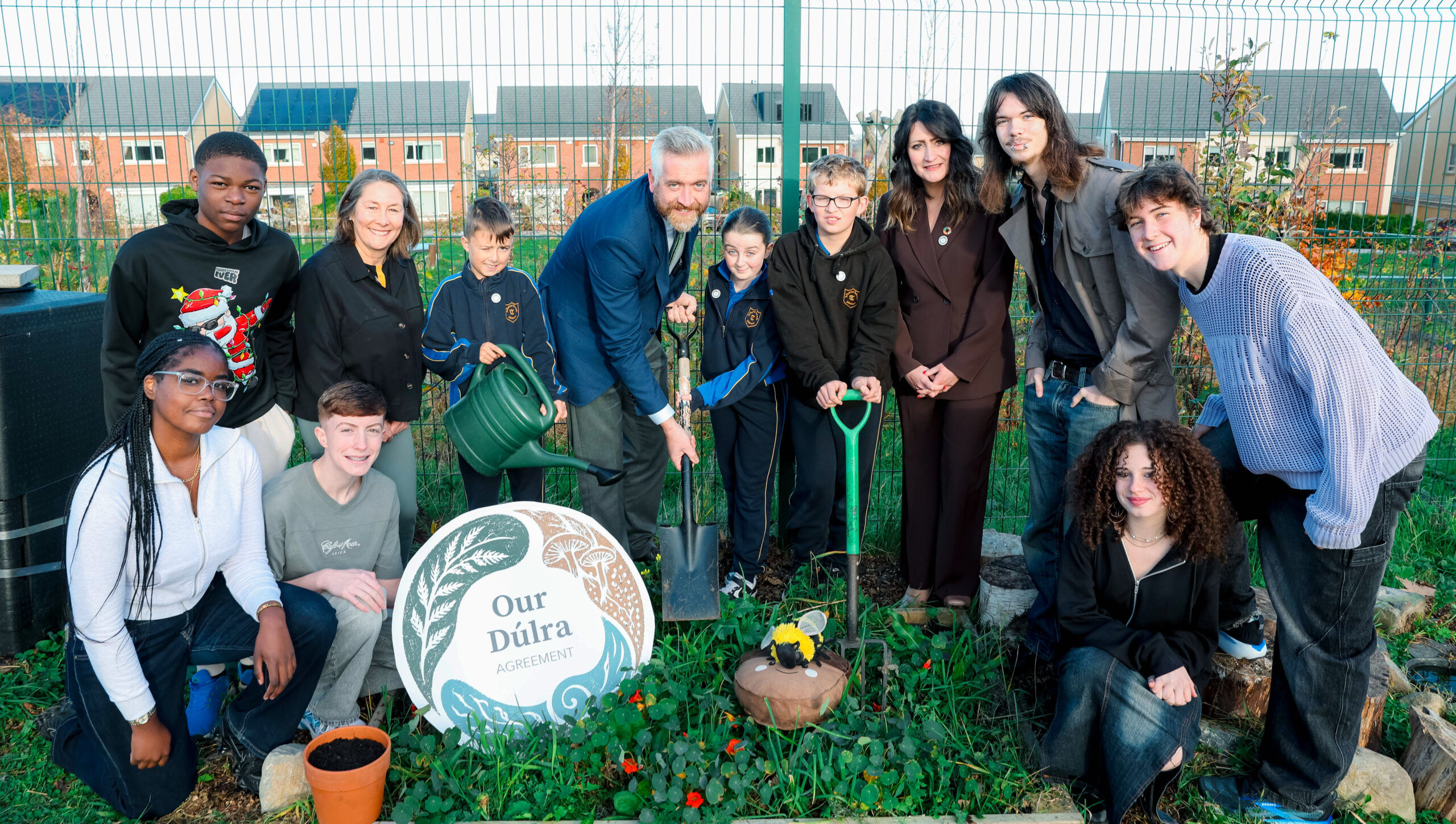
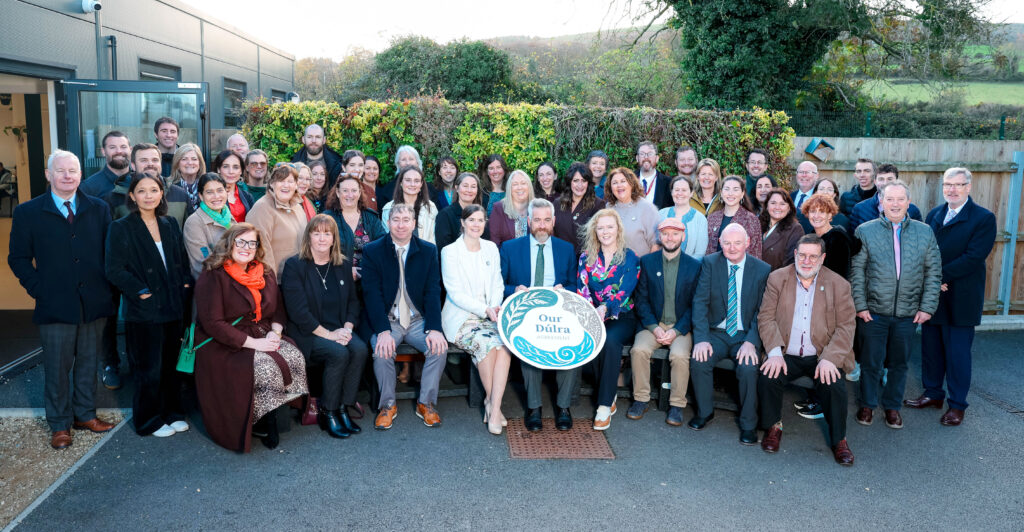
Our Dúlra Agreement was officially launched in Firhouse ETSS on 12th November 2026 by Minister of State for Nature, Biodiversity and Heritage, Christopher O’ Sullivan TD. Dúlra is the Irish word for nature, and the agreement asks education system leaders if their schools and/or organisations are prioritising nature and biodiversity on their grounds. Our CEO, Emer, spoke at the public launch of the agreement as did Claire Matthews, principal of Firhouse ETSS and member of the organising committee. The launch was was attended by leaders from many other patron and management bodies, as well as other stakeholders and partners in education.
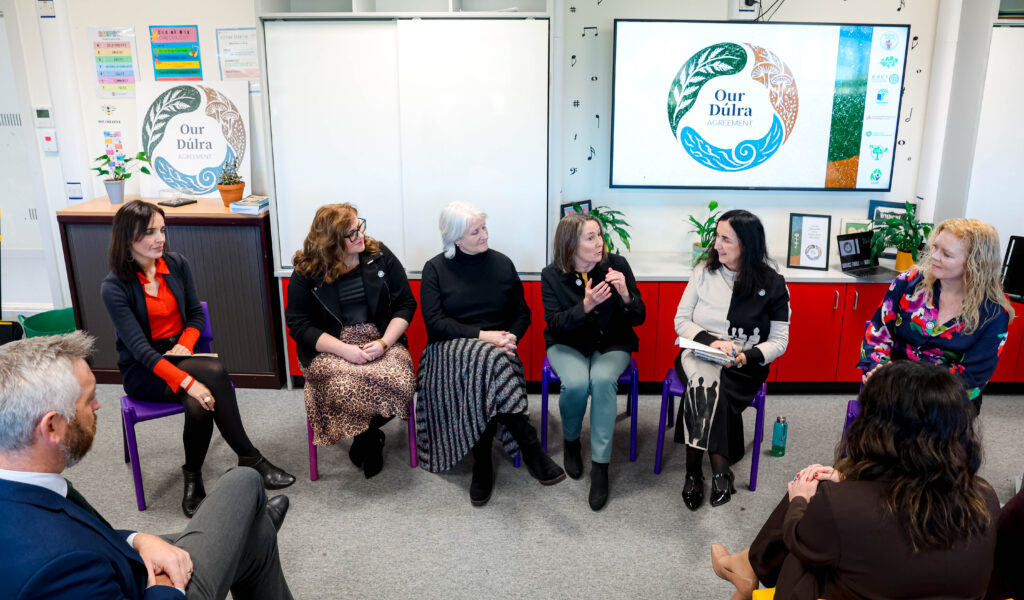
Educate Together was proud to sign Our Dúlra Agreement at a meeting of theBoard of Directors on 11th September and was one of the first patron bodies to do so. We look forward to supporting all schools in our network to realise its vision with our schools already having a strong foundation with Learn Together in primary and Ethical Education at second level. Engaging with nature enhances wellbeing, builds confidence and fosters resilience. With the Educate Together Charter, the agreement offers children and young people even more equality-based education as not every child has access to a garden, a park or woods. Nature-rich school grounds mean every child has nature within reach every day.
Ireland ranks 13th lowest of 230 territories and countries on the Biodiversity Intactness Index. The Citizens’ Assembly on Biodiversity Loss and the National Nature Restoration Plan both call for more nature engagement and biodiversity education in schools so that children and young people can participate in protecting our planet. With 4,000 schools across Ireland, imagine the impact on nature if every school became a sanctuary for biodiversity! Our Dúlra Agreement aims to promote this. It also recognises that while teaching about environmental sustainability is important, adults need to act, and we should not be abdicating responsibility for this to children and young people.
Our Dúlra Agreement in Educate Together Schools
- Learner-centred – hands-on learning outdoors suits every kind of learner and builds responsibility and confidence, enhances wellbeing and develops creativity.
- Democratically run – children and young people help decide how their grounds change, through student councils and biodiversity teams – democracy in action.
- Learn Together and Ethical Education in action – the grounds bring an ethical approach to learning about the environment to life, from discussing endangered species to protecting habitats.
- Learning across the curriculum – from SESE at primary to Climate Action at junior cycle and, Climate Action and Sustainable Development at senior cycle in post-primary.
- Hope through action – many young people worry about the planet. Visible, practical action, during school and on school grounds, turns that concern into agency.
Next steps for schools
No expertise is needed, just leadership and a willingness to act with many simple, often low-cost places to start.
- Map your grounds using the All-Ireland Pollinator Plan mapping tool.
- Identify a lawn that could become a meadow, or a grey space that could be greened.
- Ask your student council to help design the changes and set up a pupil or student biodiversity or nature team.
- Name a staff champion and give them the time and backing to lead.
- Use the grounds as an outdoor classroom across the curriculum.
- Put biodiversity and nature on your next board of management and staff meeting agendas.
There are resources and ideas for improving biodiversity on school grounds here: https://www.issn.ie/dulra-agreement.
The national office is interested in hearing from schools who are developing initiatives to support this vital work.
“What did we do when we knew?” For every child in our schools, let our answer be clear.
National Education for Sustainable Development (ESD) Forum
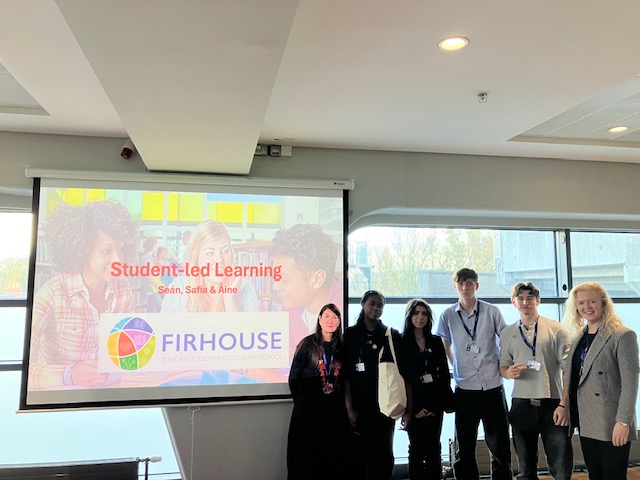
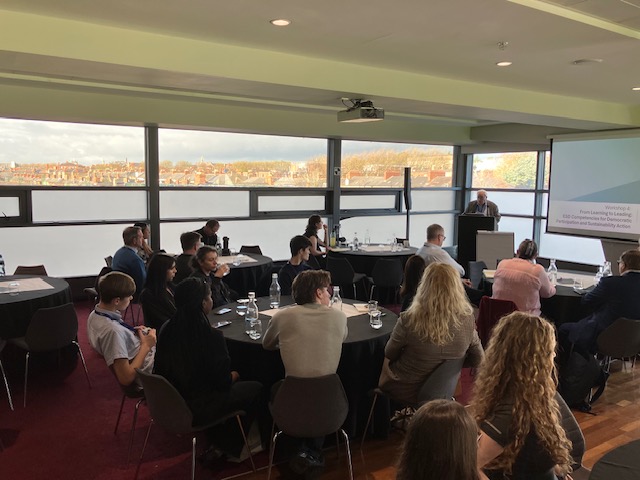
Held as part of Éire2026, the Irish Presidency of the Council of the European Union, Educate Together was proudly represented by Firhouse ETSS at the ESD Forum! Teacher Áine Sreenan and students Safia Barrett (5th Year) and Seán McDonnell (Transition Year) presented a lightning talk to national and international delegates in Croke Park.
The session: From Learning to Leading: ESD Competencies for Democratic Participation and Sustainability Action included a lightning talk from Firhouse ETSS:
Enabling students to transition from passive learners to active leaders requires deliberate, participatory pedagogy. By shifting the educator’s role from instructor to facilitator we can cultivate critical thinking, civic agency, and collective decision-making in our classrooms. But how do we become facilitators?
This lightning-talk showcases a student-led Ethical Education project on power. We share a simple lesson plan structure that promotes democratic participation and equips students to become changemakers.
Áine, Safia and Seán were supported by other members of the Firhouse ETSS school community, including Claire (principal), Jaël (5th Year student), Jakub (5th Year student) and Jennifer (parent), while national office was represented by Clíodhna (second level education officer).
It was a very impressive example of student leadership and an experience that will stay with these students.
Ní neart go cur le chéile (there is strength with unity) is the tagline of the Irish Presidency of the Council of the European Union, and for protecting our people, place and planet we require unity now more than ever.