
What happens when the forest becomes an extension of the classroom? At Kilcolgan Educate Together National School in County Galway, almost a decade of Forest School practice has shown how outdoor learning can nurture children’s well-being, strengthen holistic education, and bring the school ethos to life.
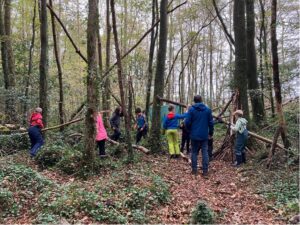
The remarkable setting of Kilcolgan Educate Together National School is unique. Nestled among the trees of Kilcornan Woods in Clarinbridge, a rural area of County Galway, the school has embraced its natural surroundings and made outdoor education an integral part of school life, creating an inseparable connection between the school and its environment.
The New Primary Curriculum launched in 2023 recognises the value of outdoor spaces, play and playfulness in primary education. However, through its Forest School programme, Kilcolgan Educate Together has been embedding outdoor learning for almost ten years, applying the Learn Together Curriculum to the school’s own context.
The idea started as a teacher initiative, showing leadership in learning. Initially, the Forest School was an eight-week programme, delivered once a year to Second Class by one trained teacher, soon joined by a second teacher.
Given its positive impact, as well as the growing interest and enthusiasm among parents, students and the Board of Management, the programme gradually expanded. Then, all children could participate and benefit from spending time outdoors, and all could experience success through playful, hands-on activities. Improvements in children’s self-esteem, attendance and well-being, alongside increased parental involvement, soon became evident.
As interest in the programme grew, two additional teachers undertook Forest School training, followed by three more in subsequent years. With this growing team of Forest School leaders, the school was able to develop a programme that could reach the whole school. Currently, Kilcolgan Educate Together has 6 teachers trained.
What does Forest School look like in practice?
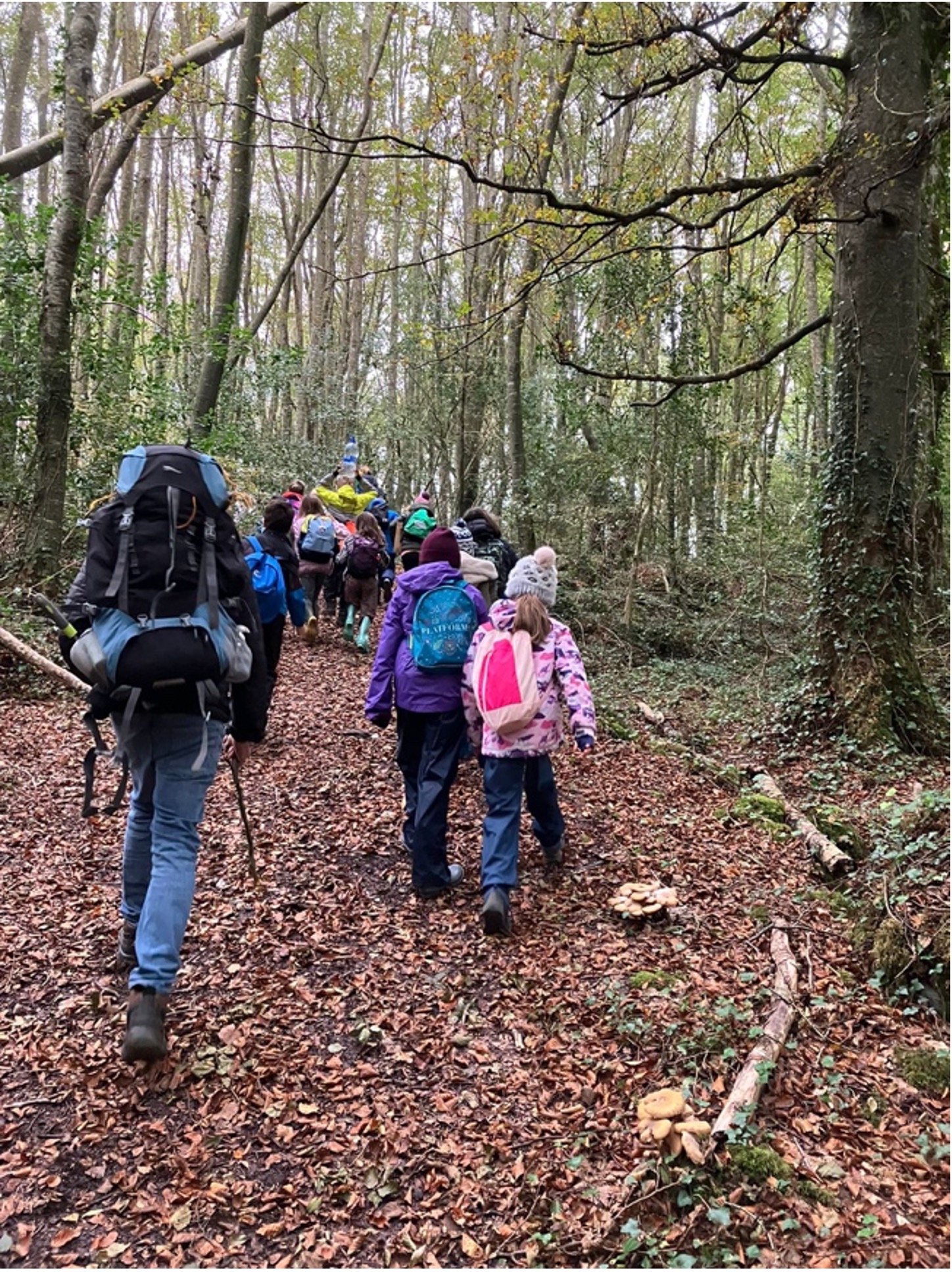
Every second-year group – Senior Infants, Second Class, Fourth Class and Sixth Class – takes part in a six-to-eight-week Forest School programme as part of the school year. Every Friday, from 9 am to 12 noon, children in these classes head into the woods, where they have opportunities to express themselves verbally and creatively. Additionally, a group of volunteer parents join each class, helping to facilitate the lessons.
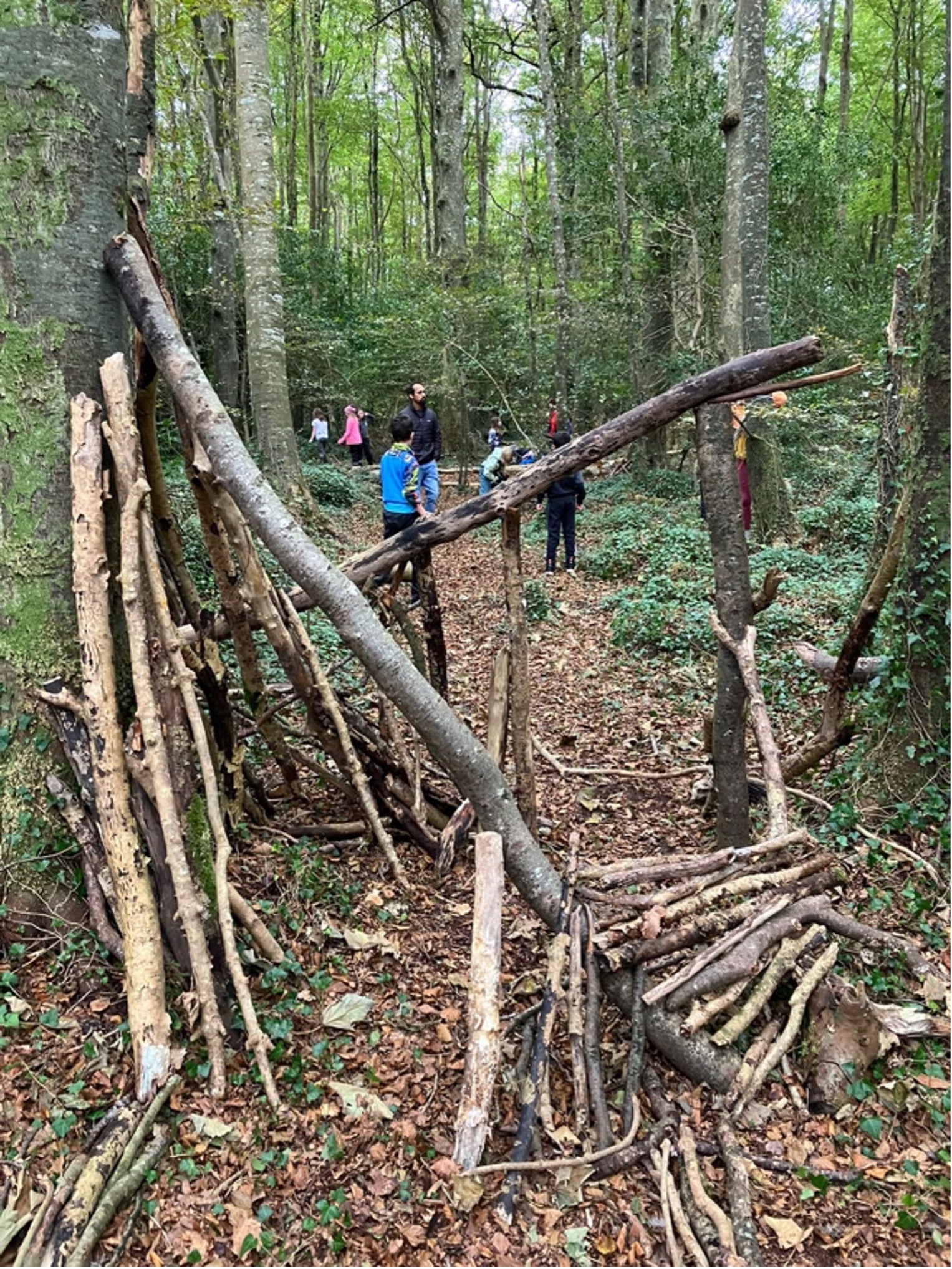
Children take ownership of their learning by choosing how they would like to spend their time during each session. Activities include arts and crafts, developing practical skills using tools, learning about fire safety, experimenting with flint and steel, and roasting marshmallows. They also take part in den-building, problem-solving activities and team challenges.
There are opportunities to strengthen relationships with teachers and classmates through games, while free play encourages independence and autonomy. Children can climb, play, relax in hammocks or find a quiet ‘sit spot’ – without being constrained by predetermined learning outcomes.
In summary, Forest School offers a welcome break from the classroom, where children’s well-being is not simply prioritised but actively nurtured.
How does the school make room for Forest School within what many might already consider an overloaded curriculum?
The school’s perspective is that Forest School offers a unique opportunity to integrate learning across several curricular areas while supporting the curriculum’s key competencies: being well, being an active learner and being an active citizen. It encourages an interdisciplinary approach to learning that is child-led and exploratory, nurtures curiosity and inspires children to learn.
In fact, a closer look at the primary curriculum reveals how Forest School brings curricular integration to life. It contributes to Physical Education through the Outdoor and Adventure Activities strand; to Geography through Natural Environments and Environmental Awareness and Care; and to Science through Living Things and Caring for My Locality. In SPHE, children explore their individual responsibility for caring for and protecting the environment, learn about fire safety, and develop trust and communication skills.
The forest also provides inspiration for creative writing, while activities such as storytelling, songs and group discussions support oral language, listening and turn-taking skills, bringing together elements of the English and Music curricula. Gaeilge is used informally during sessions, allowing children to experience the language beyond the classroom in meaningful, real-life contexts. Problem-solving activities and team challenges put mathematical skills into practice, while well-being and mindfulness are encouraged through ‘sit spots’, where children are invited to find a special place to sit, observe and relax in nature.
What is the goal?
One of the four strands of the school’s Learn Together Curriculum is An Ethical Approach to the Environment. Throughout their primary education, children at Kilcolgan Educate Together develop a deeper understanding of their role and responsibility as custodians of the natural world.
They learn to value and appreciate time outdoors, away from the classroom, and to express gratitude for the natural environment. They also become more aware of the health and well-being benefits of spending time in nature, away from screens and technology. Above all, Forest School gives children opportunities to play, explore and develop their independence.
The wider network
The Forest School leaders at Kilcolgan Educate Together are also part of a much wider community of practitioners. This network provides opportunities for ongoing professional development, skills sharing and connection with fellow practitioners through the Irish Forest School Association’s AGM and regional meetings.
Established in 2016, the Irish Forest School Association brings together Forest School leaders across Ireland and plays an important role in supporting the development of the practice and maintaining high standards. Many practitioners run weekly Forest School sessions in their local communities or organise holiday camps. Others deliver programmes through the Heritage in Schools Scheme, while some work directly with schools. However, adopting a whole-school approach to Forest School can still seem like a daunting undertaking.
By sharing their experience and helping other teachers understand and experience first-hand the benefits of Forest School, the Kilcolgan Educate Together team hopes to inspire more schools to explore outdoor learning. Their experience demonstrates how Forest School can contribute to positive student outcomes, including improved attendance, well-being and parental involvement, while also “building friendships, evoking curiosity, having fun and connecting with nature”.
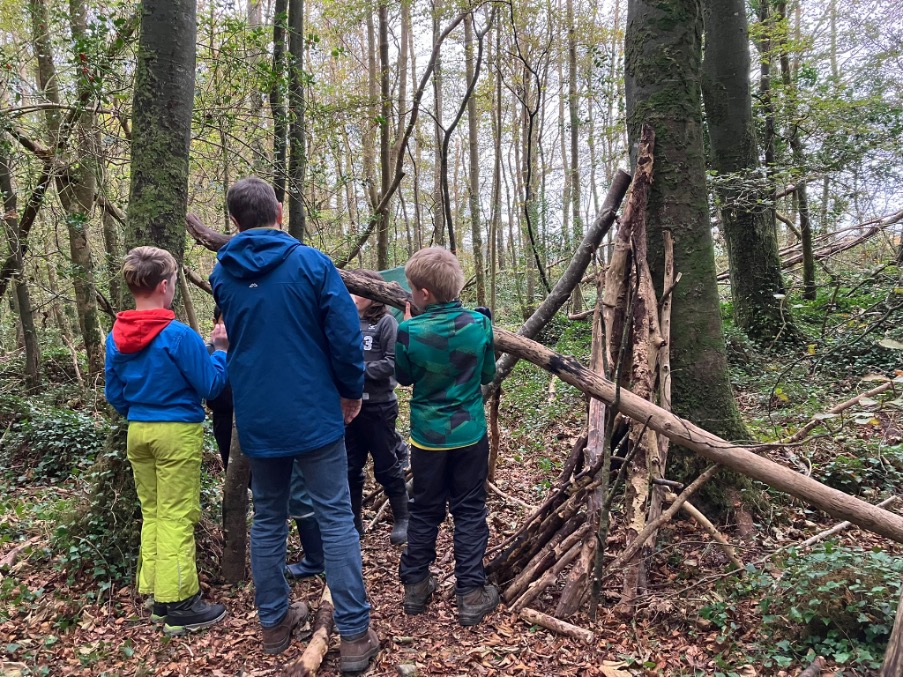
Through this approach, the school community are creating meaningful opportunities for children to develop confidence, independence, resilience, creativity and problem-solving skills. We know that children learn better when they are happy, engaged, feel safe and heard, and are active participants in their learning.
At a time when childhood is increasingly structured and screens and technology often take the place of free play, it is heartening to see a school that so deeply values giving children time and space to play, explore and build lasting foundations for their well-being. Kilcolgan Educate Together reminds us that some of the most meaningful learning experiences happen beyond the classroom – among the trees, through play, and in connection with the natural world.
Kilcolgan ETNS team, November 2026